Once upon a time there was a boy named Jack. Jack lived with his mom on a small farm at the foot of Misty Mountains somewhere in England. Jack and his mom were so poor that they had to sell Bessy, their milking cow so they could have money to fix their house in preparation for the coming winter: holes in the roof, broken windows and no front door. Jack's mom valued Bessy to be worth at least 5 gold coins.
 "You traded Bessy for a handful of fucking beans?"Jack's mom was so mad she threw the beans out of their broken window. Jack felt so gullible trading Bessy for a handful of beans that he went to bed without dinner that night.
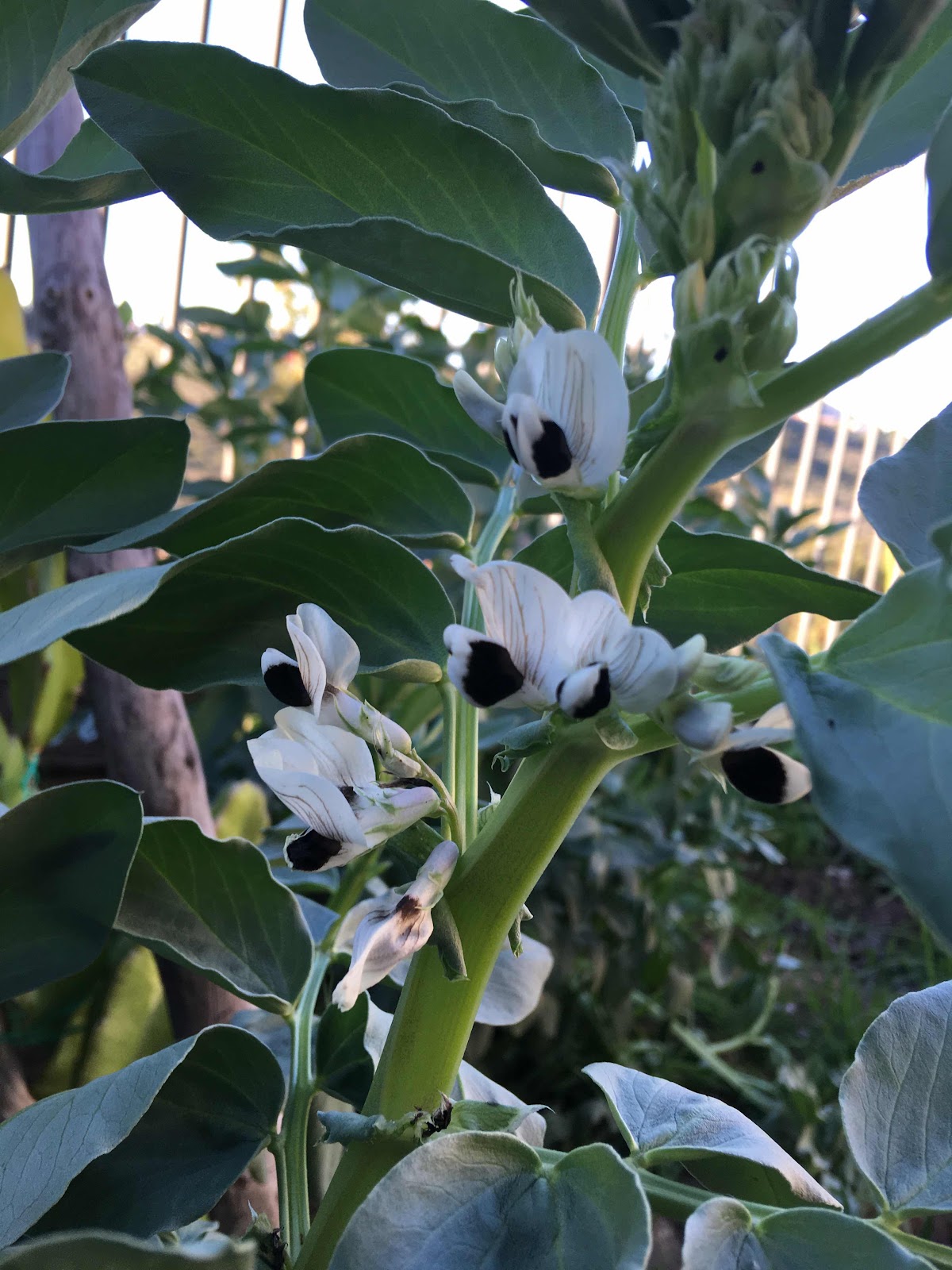
When Jack woke up in the morning, he was so surprised to see the tallest beanstalk where his mom threw the handful of beans he brought home as payment of Bessy. Thanks for the photo Beng.
"OMG, the beans really are magic!" Jack remembered
what the old man who took Bessy told him about the beans. The beanstalk had a giant trunk and stretched up into the clouds. Jack instinctively climbed the beanstalk and came into a gateway that led to a castle where a kindly giant lady lived. Mrs. G, the kindly giant lady felt so sorry when she learned that Jack went to bed without dinner the night before. She served Jack some vegetable stew but as Jack ate, he suddenly felt something like a strong earthquake.
"WTF?" wondered Jack.
"Stomp...stomp...stomp!" Heavy footsteps of what could only be that of an obese man echoed down the hallway.
"Fee fi fo fum
I smell the blood of an Englishman
Be he alive or be he dead
I'll grind his bone to make me bread." The announcement came with the approaching heavy footsteps.
"Quick! Hide! That's Mr. G, my husband. He's coming home and he's not so fond of humans." Mrs. G alerted Jack.
Jack hid in the pantry while he watched Mr. G counted five gold coins. When Mr. G left the room next to the pantry, Jack wasted no time stealing the five gold coins and thought of their house rhat need repairs for the coming winter.
"This is all I need," thought Jack to himself.
But then Jack thought that they no longer have Bessie and would probably starve without Bessie giving them milk. Jack hid some more and look around for anything else to steal.
"Hello my beautiful hen, please lay your golden eggs for me!" commanded Mr G to a sorry-looking hen.
Jack drooled and thought of all the cows he could buy with golden eggs as he watched Mr. G got laid with golden eggs. Jack wanted to get laid, too, and wasted no time stealing the hen. Jack was really feeling greedier than adventurous so he looked for more treasures in the castle.
"Hello my beautiful harp, play, please?" Jack found Mr. G in his bedroom dozing off as the harp played itself a relaxing beautiful tune.
"Wow, a magic harp! I can pretend to be a musician and perform at the palace. That harp can make me rich and famous." When Mr. G started to snore and Jack wasted no time and stashing the harp into his loot.
"Help me master, a human is stealing me!" The magic harp screamed and Mr. G was roused from his sleep.
"Stop, thief!" Mr. G chased Jack but Jack ran so fast he reached the beanstalk in no time.
Mr. G was huffing and puffing so hard when he reached the beanstalk and Jack was already at the ground. Mr. G hesitated to climb down to beanstalk since he's always been afraid of heights. But he climbed down anyway.
"Be careful my dear husband, humans can be dangerous!" Mrs. G shouted from the castle.
"Whack! Whack! Whack!" Jack saw Mr. G coming down the beanstalk.
"Noooooo!" Jack chopped the beanstalk down and Mr. G came tumbling after.
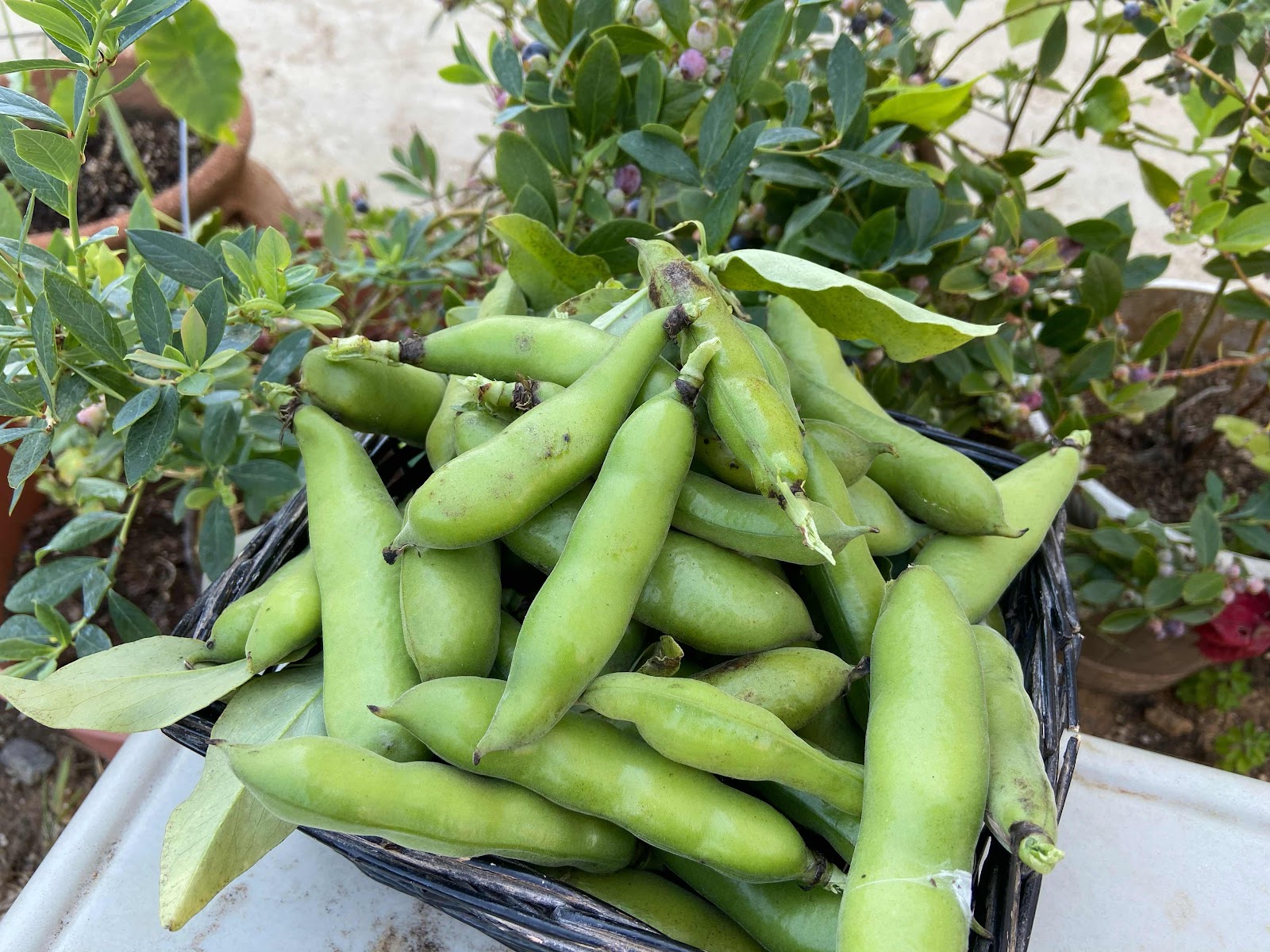
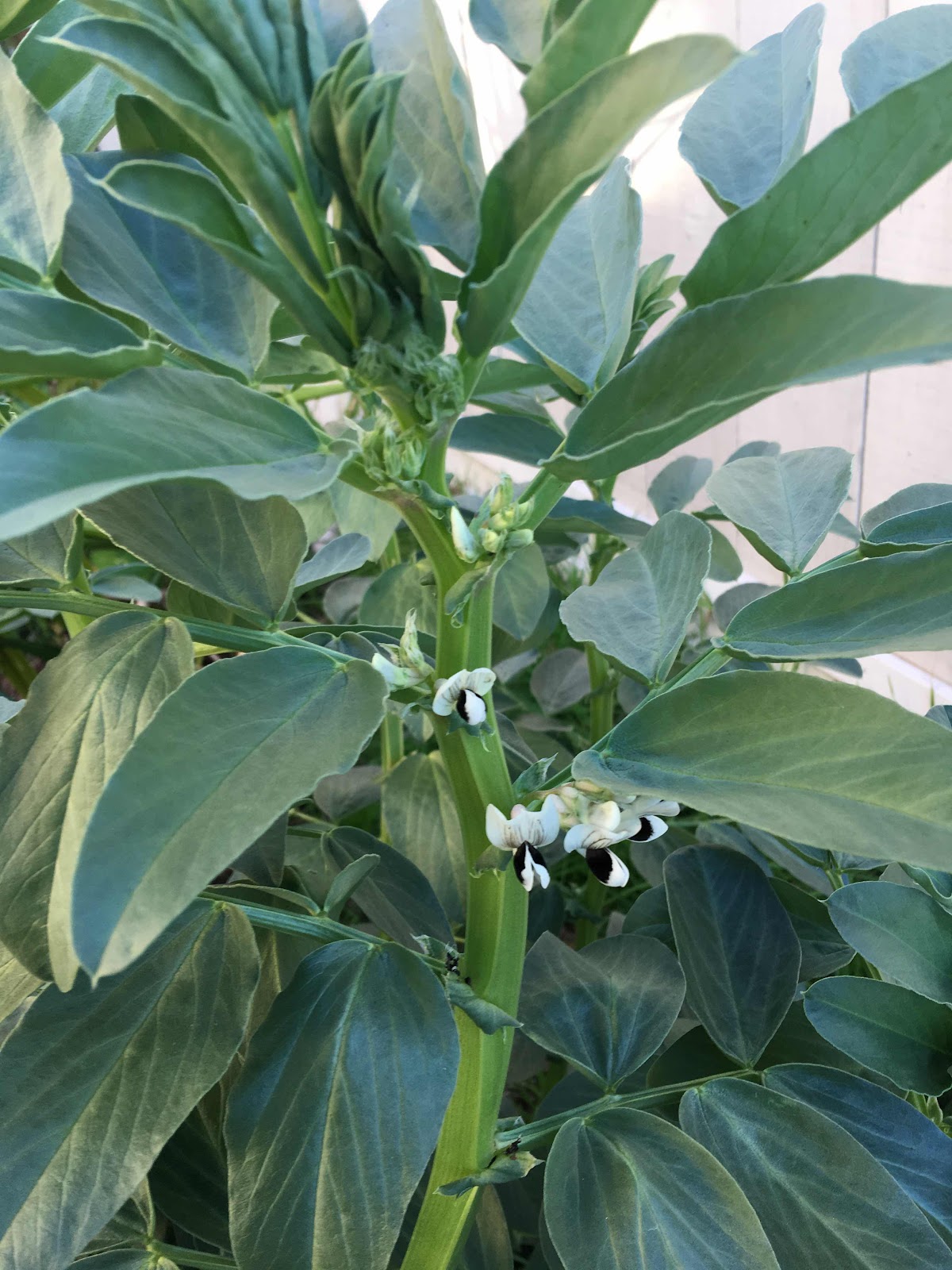
The legendary fava beans which can grow over 6 feet upright got its name from "Vicia faba", its scientific name. This flowering plant of the pea and bean family Fabacea originated from the Asia Minor or today's moden-day Turkey some 4,000 years before Jesus Christ was born. The legume has been popular in the Mediterranean region. Revered as blessed in the Sicilian tradition of some saint while disdained by Pythagoras because of the flatulence it causes, the broad bean has also been called English beans or Windsor beans. Favism is a condition especially in males of Mediterranean descent that is marked by the development of hemolytic anemia upon the consumption of fava beans or inhalation of the fava bean pollen. It is caused by a usually inherited deficiency of glucose-6-phosphate.

No comments:
Post a Comment